Following Israeli strikes on Iran’s gas infrastructure, Tehran declared that its “red lines have changed” and responded rapidly by targeting oil and gas facilities across the Middle East.
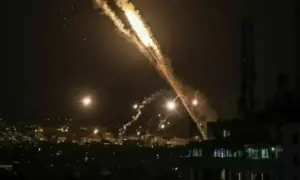
Day 19 of the conflict unfolded amid fresh attacks on Iran, Israel, Lebanon, Iraq, and critical energy infrastructure in Gulf states. The escalation is increasingly affecting not only military targets but also the region’s gas industry, water supply, and maritime trade.
Iran Responds Swiftly and Decisively
In Iran, oil and gas infrastructure near the South Pars field was hit, causing severe damage to key gas processing and distribution centers, as well as several refineries.
After the strikes, Tehran declared that its “red lines have changed,” signaling what appears to be the beginning of a “full-scale economic war” against its adversaries, the United States and Israel, according to RT.
Iran warned that all energy infrastructure linked to the United States in the region would become targets if its own facilities continued to be attacked. A military spokesperson stated that such facilities “will be reduced to ashes.”
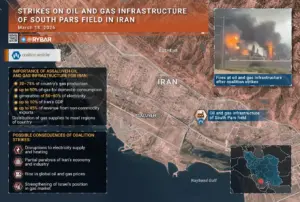
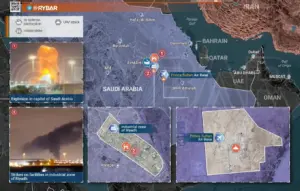
Iran’s response to the South Pars attack was both rapid and forceful. A missile strike ignited fires at Qatar’s Ras Laffan industrial complex, one of the region’s most critical energy hubs. Riyadh, Saudi Arabia, was also targeted almost simultaneously with missiles and drones.
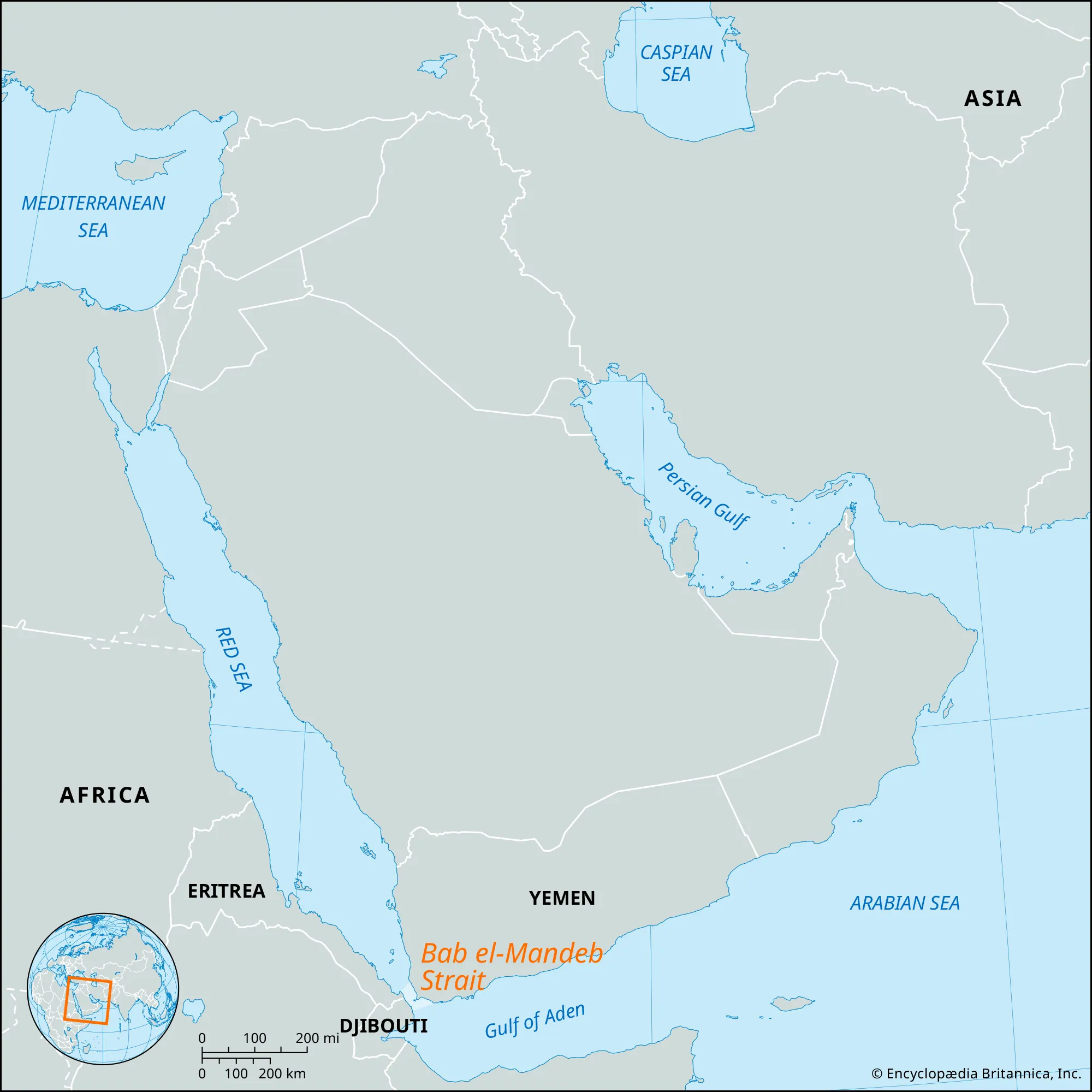
Iran’s so-called “mosquito fleet” was again spotted off the coast of Oman following an attack on a commercial vessel. Meanwhile, remarks by Iranian Foreign Minister Abbas Araghchi about controlling the Strait of Hormuz after the war underscore Tehran’s intent to maintain pressure on one of the world’s most vital energy corridors.
At the same time, Iran continues to endure strikes on its capital, though these are receiving diminishing media coverage. Israel has also claimed it killed Iranian Intelligence Minister Ismail Khatib; Iran’s president later confirmed his death.
A worsening water crisis in northwestern Iran is compounding the situation: rainfall is down 70–90% from normal levels, while power outages, sanctions, and wartime spending are accelerating the deterioration of water infrastructure.
Israel Faces Intensifying Missile Barrages
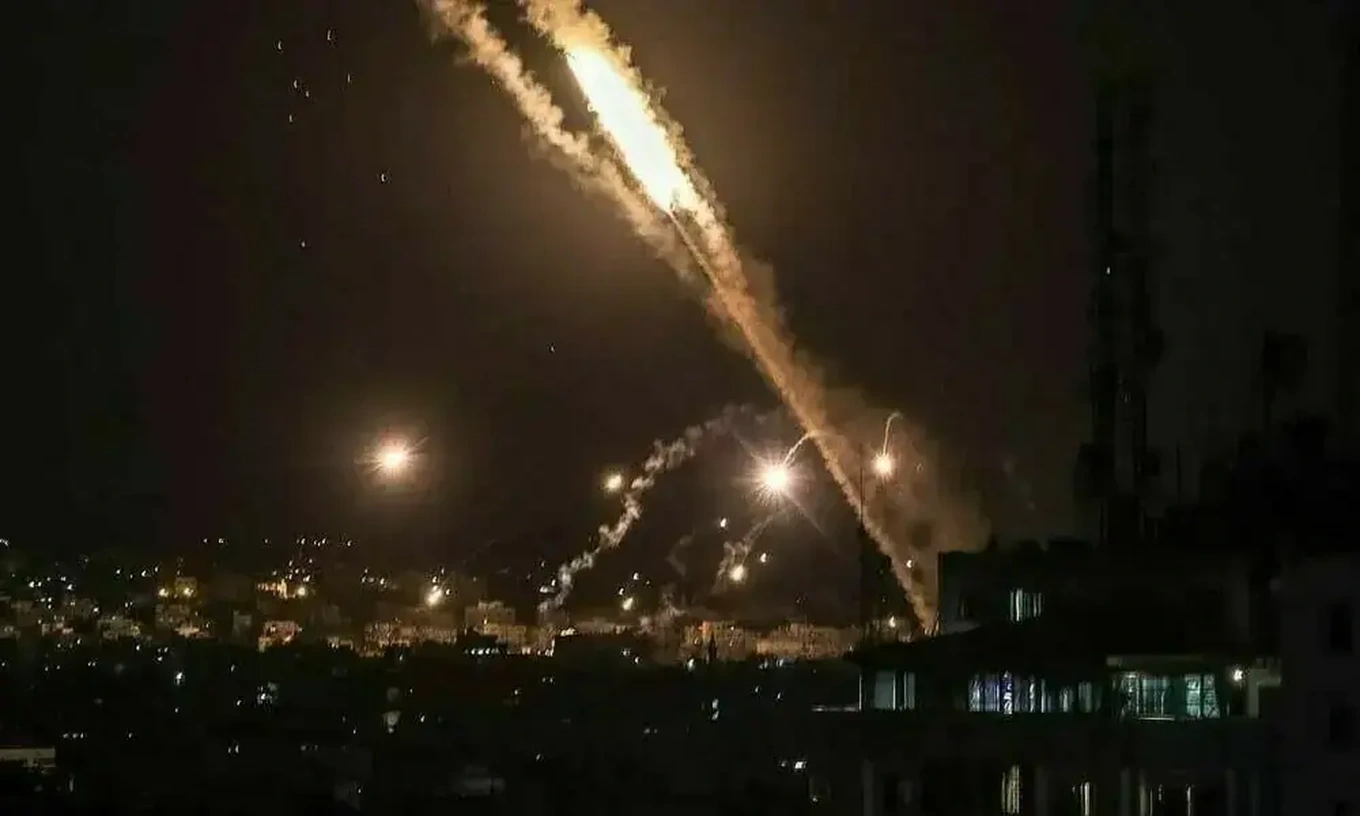
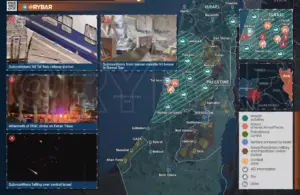
In Israel, Iranian missile attacks have grown more frequent, including nighttime strikes. In the Gush Dan metropolitan area, casualties have been reported, with damage to residential buildings, rail infrastructure, parking facilities, and power lines.
Along the Lebanese border, the Israel Defense Forces (IDF) have advanced toward Aytaroun and are attempting to consolidate gains toward Al-Tayba. At the same time, Israeli forces continue to strike southern Lebanon and Beirut, while Hezbollah has so far limited its response to artillery fire and ambushes rather than large-scale operations.
A Region on Fire
In Iraq, attacks on U.S. facilities and Kurdish positions continue unabated. Drones again targeted Victoria Air Base and the U.S. Embassy complex in Baghdad’s Green Zone, while Iran also struck targets in Erbil and Sulaymaniyah. In response, U.S. forces launched strikes against Hashd al-Shaabi positions in Wasit and Anbar provinces.
In a phone call with Azerbaijan’s foreign minister, Iran’s Foreign Minister Abbas Araghchi warned that neighboring countries must not allow their territory to be used for attacks against Iran, or those locations could become legitimate targets.
A vessel was reportedly struck by an “unknown object” late on March 18 off the eastern coast of the UAE near the Strait of Hormuz, according to the UK Maritime Trade Operations center.
In the UAE, Iran attempted to strike Al Dhafra Air Base, while reports emerged of a shutdown at the Shah gas processing facility in Abu Dhabi amid heightened alerts.
Qatar’s state energy company reported “extensive damage” from fires following Iranian missile strikes on the key industrial city of Ras Laffan. Qatar’s Foreign Ministry described the attacks as a “direct threat to national security and regional stability,” warning they risk dragging non-participant states into the conflict.
Qatar added that it would take “additional measures” to defend itself if Iran continues “hostile actions.”
These developments follow Iran’s warning that it would retaliate by targeting Gulf energy infrastructure after Israel struck the South Pars gas field—one of the largest in the world.
Israeli media reported that the strikes were carried out by Tel Aviv with Washington’s approval. Tehran has since named multiple energy facilities across Saudi Arabia, the UAE, and Qatar as potential retaliation targets.
Saudi Arabia’s foreign minister said the kingdom “reserves the right to take military action” against Tehran, while Qatar expelled Iranian military and security attachés.
Oil prices surged to nearly $110 per barrel on March 18 after attacks on Gulf energy infrastructure, with fires reported in Qatar and aerial threats intercepted in Saudi Arabia following warnings from Iran’s Islamic Revolutionary Guard Corps (IRGC). The IRGC accused the U.S. and Israel of targeting its oil and gas facilities, according to The Guardian.
Rising threats to Gulf energy infrastructure are fueling concerns about further disruptions to global supply, especially as tensions persist around the Strait of Hormuz.
President Donald Trump reportedly supported the strike on Iran’s South Pars gas field as a signal to Tehran regarding the Strait of Hormuz but opposed further attacks on Iran’s energy infrastructure, according to The Wall Street Journal. However, the report noted he may be willing to expand such targeting depending on Iran’s actions in the strategic waterway.
Saudi Arabia said it successfully intercepted four ballistic missiles aimed at Riyadh, with debris falling across parts of the capital but no reported casualties. It also intercepted drones targeting gas facilities in the country’s eastern region, again with no reported damage.
In a joint statement issued on March 19 following a meeting in Riyadh, foreign ministers from 12 Arab and Islamic countries called on Iran to “immediately cease its attacks” and respect international law.
The statement condemned Iranian strikes on Gulf states, Jordan, Azerbaijan, and Turkey, accusing Tehran of targeting “residential areas and civilian infrastructure, including oil facilities, desalination plants, airports, residential buildings, and diplomatic sites.”
The ministers also condemned Israeli attacks on Lebanon and reaffirmed their support for Lebanon’s security, stability, and territorial integrity.
Latest U.S. Intelligence Assessment on Iran
Mixed signals are emerging regarding possible communication between Washington and Tehran, suggesting that U.S. and Israeli expectations of a rapid internal collapse in Iran have not materialized.
Notably, just one day after resigning, former U.S. counterterrorism chief Joe Kent stated there was no intelligence indicating Iran was planning a “large-scale surprise attack” akin to 9/11 or Pearl Harbor.
On March 18, U.S. Director of National Intelligence Tulsi Gabbard said the intelligence community assesses that Iran’s regime “appears to remain intact, though significantly weakened” by strikes on its leadership and military capabilities.
She added that Iran’s ability to project conventional military power has been largely degraded, leaving it with limited options. U.S. “maximum pressure” sanctions, along with renewed European measures, have “significantly weakened” Tehran’s strategic position.
“The intelligence community assesses that internal tensions are likely to increase as Iran’s economic situation deteriorates,” Gabbard said.
CIA Director John Ratcliffe also warned that Iran is gaining experience with larger and more powerful rocket technologies through its space launch program and, “if left unchecked… could develop the capability to launch missiles capable of reaching the U.S. mainland.”