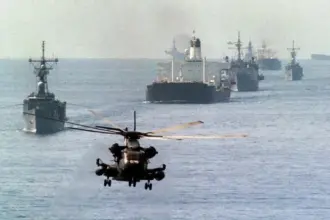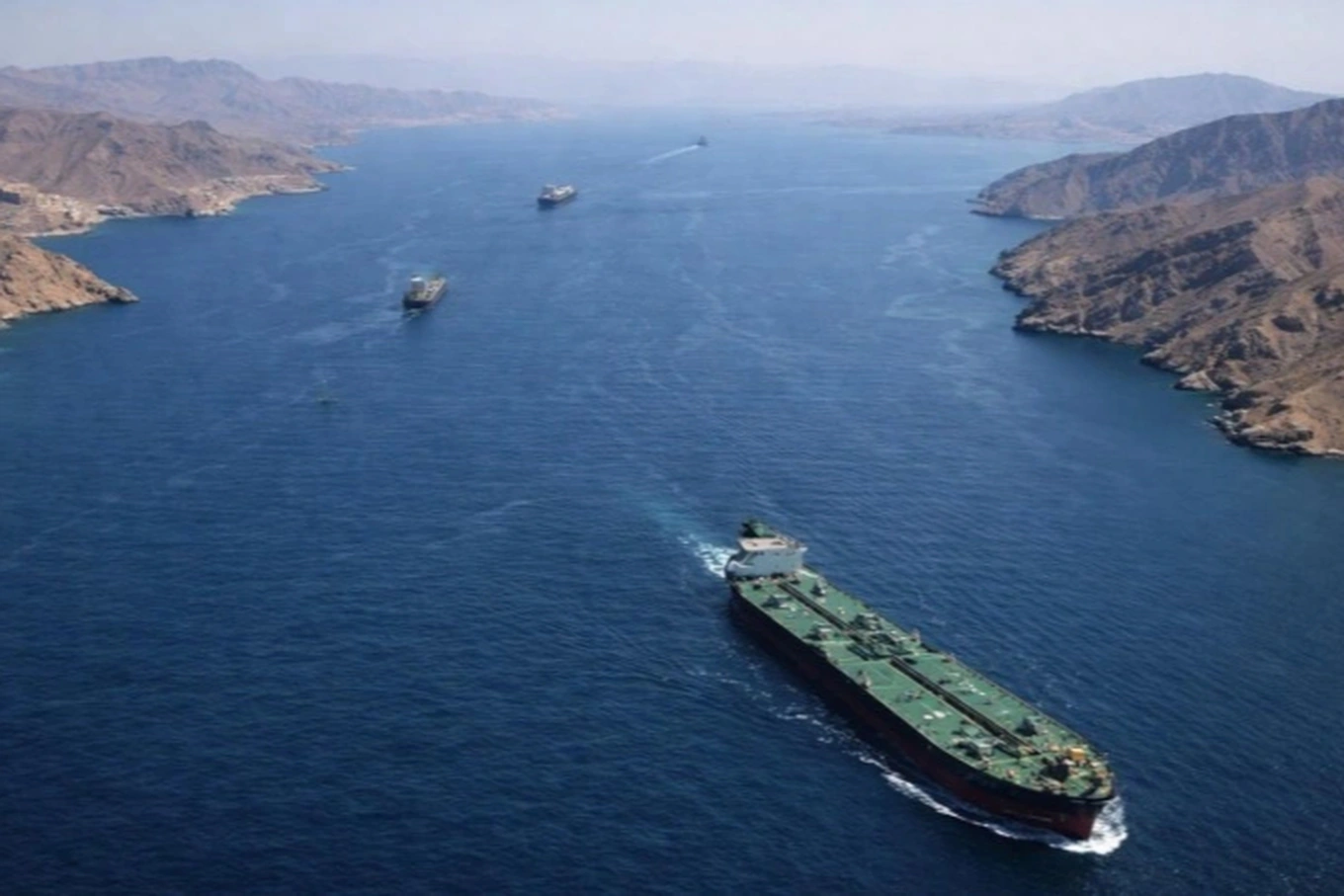
The U.S. Navy has declined near-daily requests from the shipping industry to provide military escorts for vessels transiting the Strait of Hormuz, citing the high risk of attack.
According to sources familiar with the matter, the U.S. Navy has held regular meetings in recent days with representatives from the shipping and oil industries. During those discussions, officials said they are currently unable to provide naval escorts for commercial vessels passing through the strategic waterway.

Industry representatives have reportedly raised the request for naval protection almost every day during these exchanges. However, the U.S. Navy’s assessment at a meeting on March 10 remained unchanged: escorts could only be considered once the risk of attacks declines.
A U.S. official confirmed that American forces have not escorted any commercial ships through the strait so far. The United States Department of Defense has not responded to requests for comment.
Meanwhile, Dan Caine, chairman of the Joint Chiefs of Staff, said on March 9 that the U.S. military had begun reviewing possible options to escort vessels through the strait if ordered to do so.
“We are examining a range of different options,” Caine said.
Earlier, U.S. President Donald Trump had repeatedly stated that the United States was prepared to provide naval escorts whenever necessary to restore normal shipping through the Strait of Hormuz.
“When the time comes, the U.S. Navy and its partners will escort tankers through the strait if needed,” Trump said during a press conference at Mar-a-Lago on March 9. “I hope it won’t be necessary, but if it is, we will escort them through.”
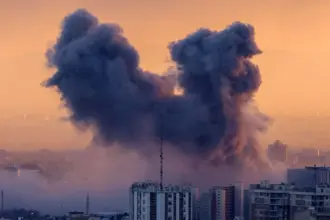
Shipping through the narrow waterway has largely frozen since the United States and Israel launched military operations against Iran more than a week ago. The disruption has stalled exports of roughly one-fifth of the world’s oil supply, pushing global oil prices to their highest levels since 2022.
Although some vessels have transited the route in recent days, most shipping traffic remains suspended, with hundreds of ships anchored and waiting.
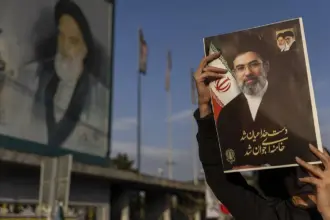
A senior official from Iran’s Islamic Revolutionary Guard Corps (IRGC) said the strait had effectively been closed and warned that Iran would fire on any vessel attempting to pass through.

Meanwhile, Saudi Aramco, the world’s largest oil exporter, warned that global oil markets could face “catastrophic consequences” if the conflict with Iran continues to disrupt shipping through the Strait of Hormuz.
Maritime security experts say protecting the waterway would be extremely difficult—even with an international coalition—because Iran could deploy naval mines or launch inexpensive drone attacks.
“Neither France, the United States, an international coalition, nor anyone else can guarantee security in the Strait of Hormuz,” said Adel Bakawan, director of the European Institute for Studies on the Middle East and North Africa.
A maritime security source added that ensuring safe passage could require the United States to control Iran’s entire coastline along the strait.
“There simply aren’t enough naval vessels to do that, and the risk would remain high even with escorts,” the source said. “One or two escort ships could easily be overwhelmed by swarm attacks from Iranian speedboats or drones.”