Israel believes Iran has suffered severe damage to its military infrastructure and may need years to restore its capabilities, according to the Israel Defense Forces (IDF).
On March 15, the IDF said that even if hostilities were to end immediately, the damage inflicted by Israel and the United States on Iran’s military-industrial complex would take years to repair.
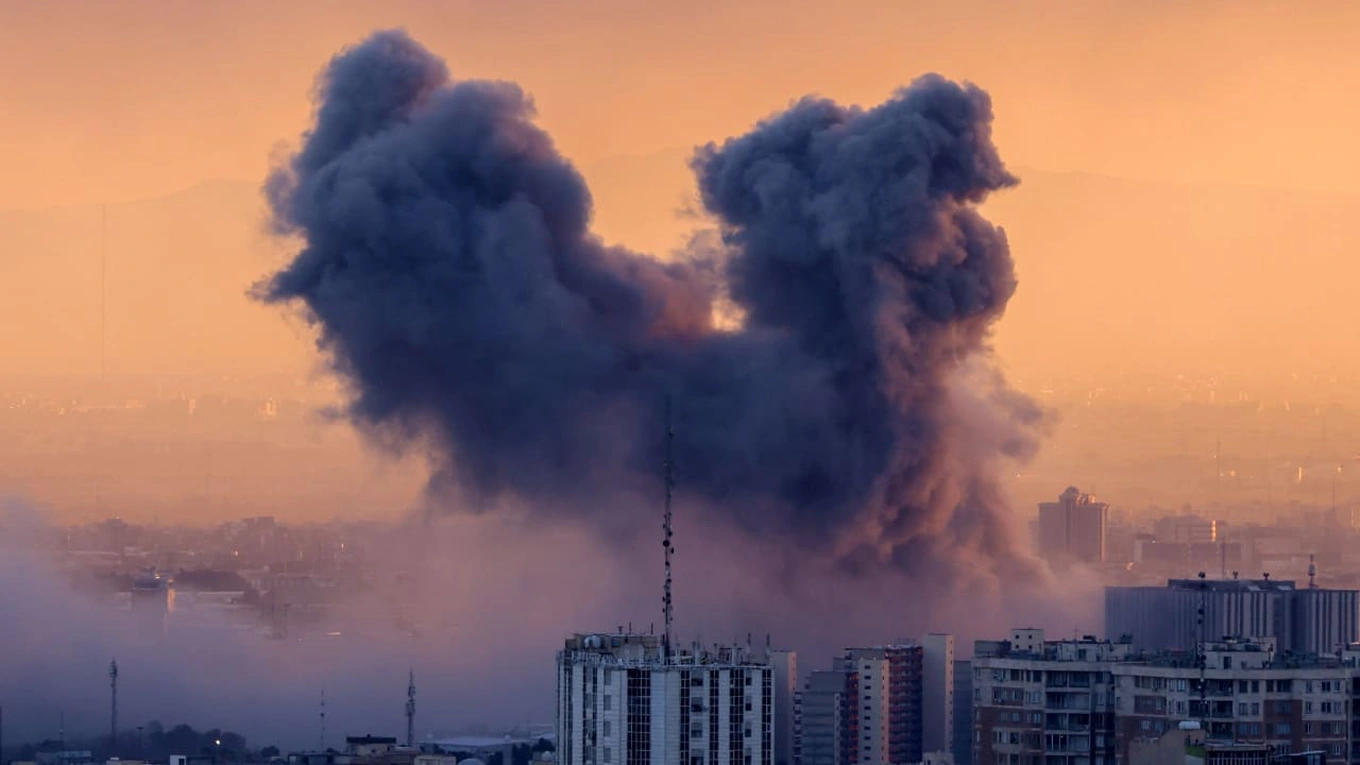
The Israeli military said it has struck about 2,200 Iranian-related targets, including military facilities.

At the outset of the conflict, the IDF mapped 2,600 sites linked to Iran’s military-industrial infrastructure. According to Israeli assessments, between two-thirds and three-quarters of those facilities have been destroyed in Israeli and U.S. airstrikes so far.
For comparison, in October 2024 the IDF targeted only 14 sites linked to Iran’s military-industrial complex, while in June 2025 the figure was about 100 targets.
Israel now says it is focusing on destroying another one-third to one-quarter of the remaining targets, describing the effort as one of its top operational priorities.
The IDF hopes that the large-scale destruction of Iran’s military supply chains and defense industry sectors will slow any future attempt by Tehran to rebuild its ballistic missile capabilities and continue supporting proxy armed groups across the region.
According to the Israeli military, around 70% of Iran’s ballistic missile launchers have been destroyed, though the percentage of actual ballistic missiles eliminated is believed to be lower.
Iran has also demonstrated an ability to rebuild launchers rapidly. Israeli officials noted that in about eight months, Tehran was able to restore—and even exceed—the roughly 200 launchers the IDF destroyed in June last year.
When asked whether Israeli strikes on the entire supply chain could truly prevent Iran from rebuilding its ballistic missile system—or merely weaken other parts of its military power—the IDF did not provide a clear answer.
Israel says the number of missiles fired daily by Iran has dropped significantly since the start of the conflict—from roughly 100 missiles per day initially, to about 20 per day shortly afterward, and now around five per day.
The Israeli military did not guarantee that it could prevent Iran from increasing the number of daily launches again, but it predicted that the average number of attacks would continue to decline in the coming days and weeks, though not disappear completely.
Iran has not commented on the figures released by Israel. However, there has been evidence that Tehran has used decoy systems resembling real weapons to deceive U.S. and Israeli strikes.
Iran has also claimed it has so far used only older missiles produced years ago, saying that newer missiles remain in its arsenal and could be deployed to deliver further surprises for the United States and Israel.
Some observers believe Iran may be preparing for a prolonged war of attrition, seeking to use time as a strategic factor to pressure the United States and its allies, whose military resources vastly exceed those of Tehran.