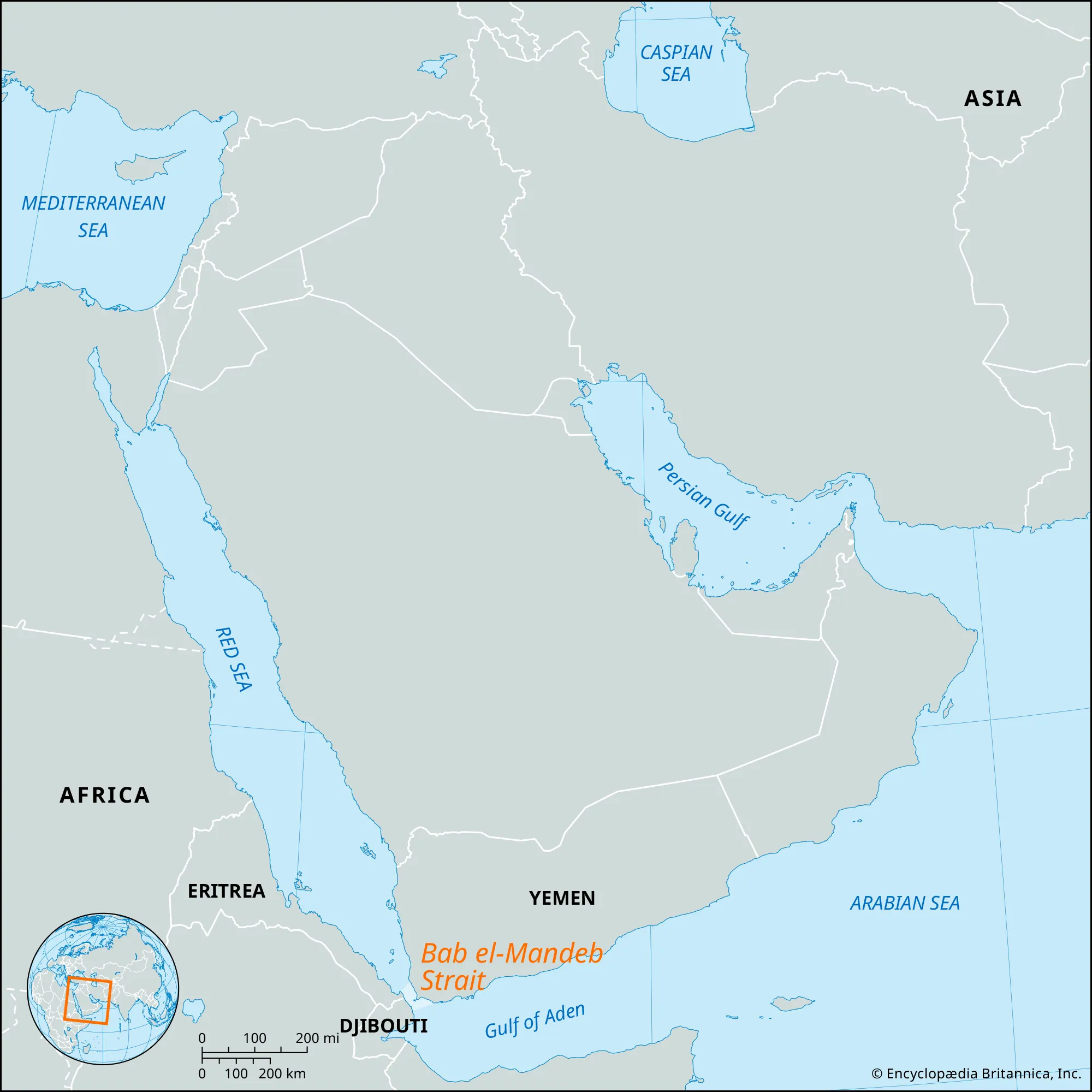
The Bab el-Mandeb Strait plays a vital role in Asia–Europe trade flows. Any vessel traveling between Europe and Asia via the Suez Canal must pass through this critical maritime artery.
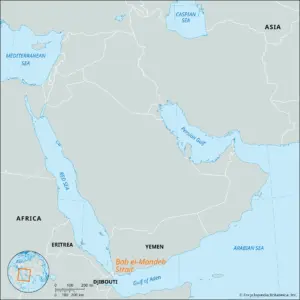
Located between Yemen and Djibouti, the Bab el-Mandeb Strait is one of the world’s most important maritime chokepoints. At its narrowest point, it is only about 29–30 km wide. The strait connects the Red Sea to the Indian Ocean and serves as the sole gateway to the Suez Canal—the shortest route between Asia and Europe. All ships moving between the two continents must pass through it. Historically, about 10–12% of global maritime trade and an average of 8.8 million barrels of crude oil per day transited this route before recent crises.
If the Bab el-Mandeb Strait were to be blockaded, the consequences could be severe—especially as the strategically vital Strait of Hormuz remains effectively “frozen.”
The importance of Bab el-Mandeb has become even more pronounced as the Strait of Hormuz—the main oil export route from the Gulf—has been blockaded by Iran amid direct conflict with the U.S. and Israel. Since February 28, Iran has retaliated by enforcing a de facto blockade at Hormuz, disrupting approximately 20 million barrels of oil per day, equivalent to 20% of global demand. If Bab el-Mandeb were also blocked, the world would face a “dual chokepoint” scenario, affecting nearly 30% of seaborne oil and a significant portion of Asia–Europe trade.
In mid-March, Yemen’s Houthi forces—close allies of Iran within the so-called “Axis of Resistance”—issued a strong warning. Senior military commander Abed al-Thawr declared: “Once a decision to intervene is made, the first measure could be an official declaration of a maritime blockade against the U.S. and Israel.” He emphasized that commercial vessels, warships, and even aircraft carriers heading toward U.S. or Israeli-controlled territories could be intercepted. The Houthis are also considering “completely closing the Bab el-Mandeb Strait to any vessel bound for Israeli ports.”
Houthi leader Abdul Malik al-Houthi added that his forces “have their hands on the trigger” and are ready to act if the conflict escalates. These statements, issued just two weeks after the outbreak of war between the U.S.–Israel and Iran, are not mere rhetoric but reflect a broader strategy of using Bab el-Mandeb as a strategic lever through proxy forces.
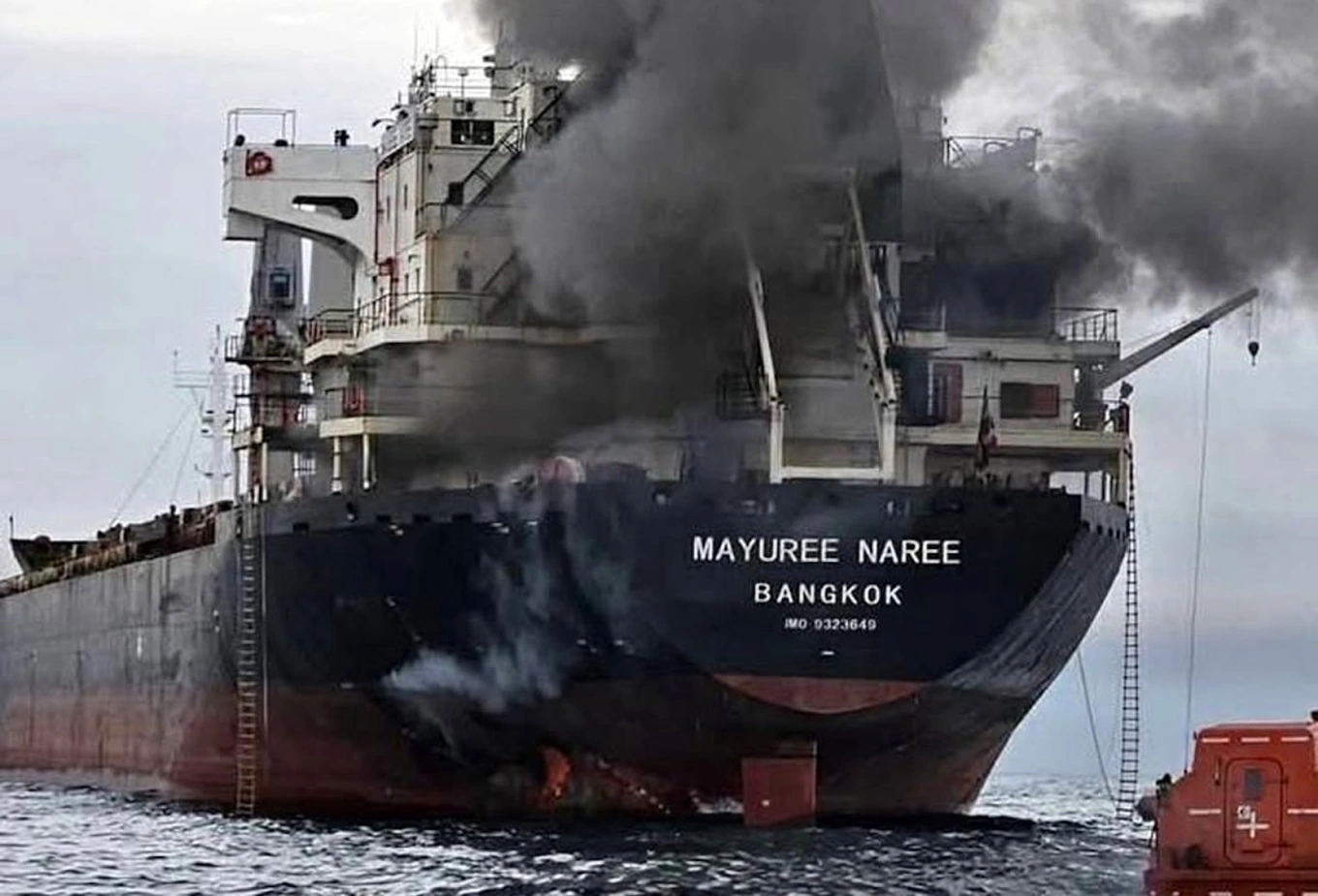
The Houthis—who have controlled much of Yemen since 2014 and receive Iranian support in weapons and training—have emerged as a key actor. From late 2023 to 2025, they were accused of carrying out more than 190 attacks on vessels in the Red Sea, forcing many major shipping companies to avoid the Suez route.
Historically, Bab el-Mandeb has been referred to as the “Gate of Tears” due to its dangers, including shipwrecks and conflict. The Houthis have previously imposed de facto blockades on Israeli or Israel-linked vessels, reducing Suez traffic by 50–57% during peak periods.
This latest warning is not unprecedented, but it is now directly tied to calls to “support Iran” at a time when Hormuz is already closed—creating an unprecedented dual-pressure scenario. Analysts describe this as Iran’s “proxy warfare” strategy, allowing Tehran to inflict economic damage on the West without direct confrontation.
Strategic Importance of the Bab el-Mandeb Strait
According to TASS, Bab el-Mandeb occupies a key geographic position at the southern end of the Red Sea, just a few kilometers from Aden (Yemen) and Djibouti. Its narrow width makes it highly vulnerable to control via coastal missiles, UAVs, or small vessels. Around 4.2 million barrels of oil per day still passed through the strait in the first half of 2025 (down from pre-crisis levels of 8–9 million barrels). In addition to oil, the route is crucial for transporting liquefied natural gas (LNG), Asian manufactured goods to Europe, and food supplies.
Unlike Hormuz, which mainly handles Gulf oil exports, Bab el-Mandeb is the primary corridor for Asia–Europe container trade via the Suez Canal. An estimated 10–12% of global maritime trade depends on this route. If blockaded, ships would be forced to reroute around the Cape of Good Hope (South Africa), adding 12–15 days to voyages, increasing fuel consumption, and significantly raising logistics costs.
Historically, the strait has witnessed numerous conflicts, including the Yemen war and Houthi attacks from 2023–2025. Insurance companies have classified Bab el-Mandeb as a high-risk zone, forcing shipowners to pay massive premiums or suspend operations.
A full blockade would create a compounded shock alongside the Strait of Hormuz. In total, nearly 25–30 million barrels of oil per day could be disrupted—close to 30% of global seaborne supply. Oil prices have already surpassed $110 per barrel, and analysts at Goldman Sachs warn prices could rise to $120 or higher if the threat materializes.
At the same time, Asia–Europe trade risks paralysis, disrupting global supply chains. Food and consumer goods prices would rise, fueling inflation. Major shipping companies have already suspended Suez Canal services and imposed emergency surcharges of $2,000–$4,000 per container. Traffic through Bab el-Mandeb has dropped sharply, to about 33 vessels per day as of early March.
For Europe, oil supplies from the Gulf via the Suez Canal could be cut off, forcing reliance on more expensive alternatives or increased imports from the U.S. and Russia. Asia faces potential shortages of LNG and export goods. Saudi Arabia, a major oil exporter, could lose its final export route via Yanbu if both straits are closed.
The global economy risks localized recession if Bab el-Mandeb is blockaded. Rising transport costs, supply chain disruptions, and energy-driven inflation would push up food and commodity prices. Developing countries reliant on maritime trade would suffer indirectly through higher oil prices and delayed shipments.
Responses from Key Actors
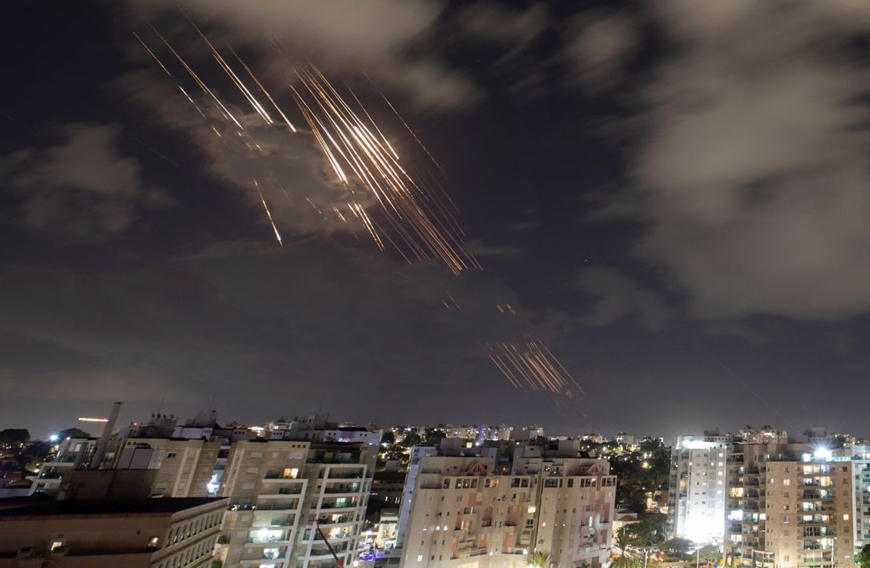
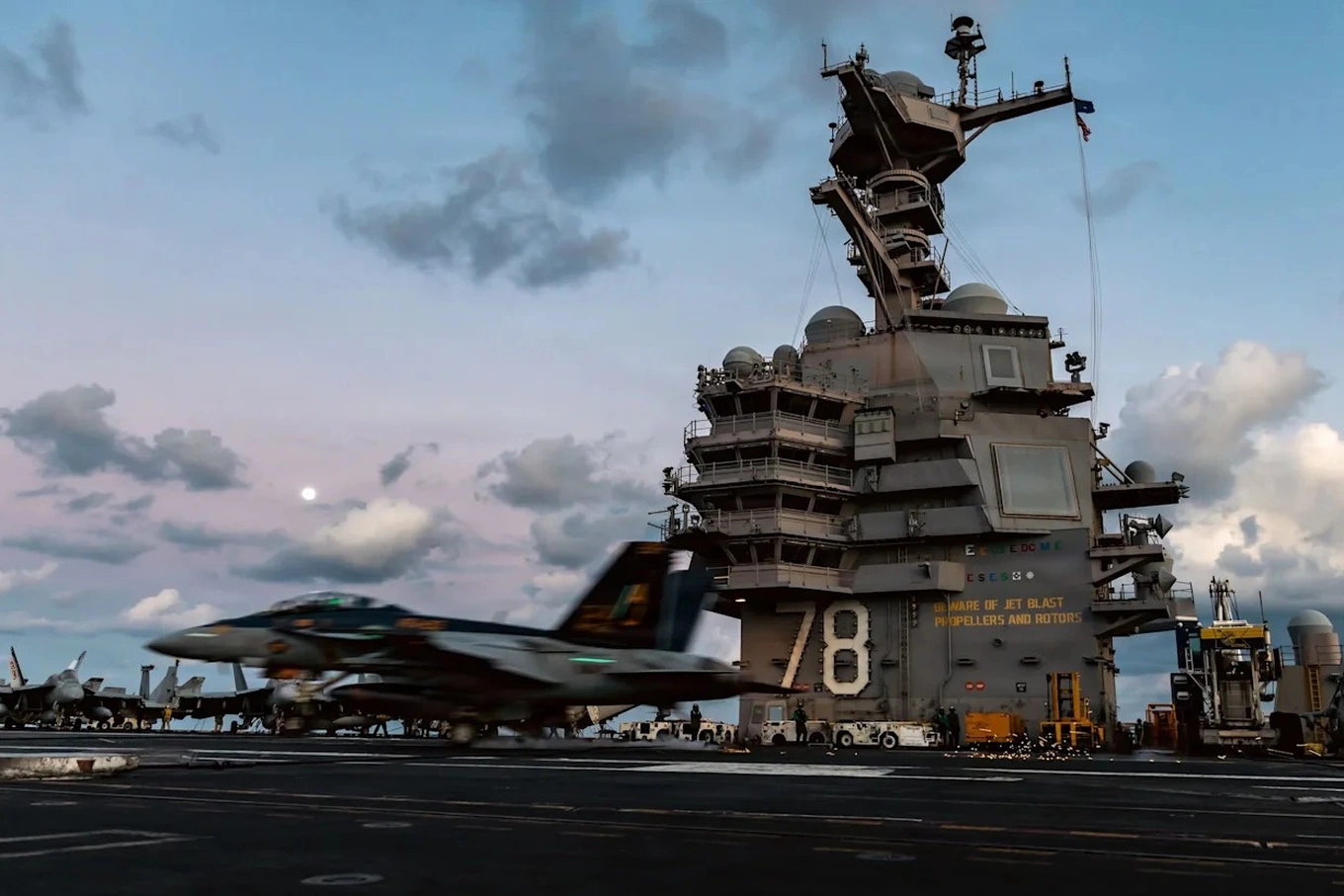
According to Western sources, the U.S. and Israel have not publicly responded directly to Houthi threats. However, past actions suggest readiness to deploy naval forces and conduct airstrikes (as seen in operations against the Houthis in 2024–2025). Coalition forces have increased their presence in the Gulf and Red Sea. However, with Hormuz already closed and conflict with Iran ongoing, U.S.–Israel resources are significantly stretched.
International shipping companies have acted quickly, suspending most Suez routes and diverting vessels around the Cape of Good Hope. The UK Maritime Trade Operations (UKMTO) has recorded 17 attacks on civilian ships since February 28. Insurance providers have withdrawn or sharply raised premiums.
As of March 19, no full blockade has been implemented at Bab el-Mandeb. Houthi forces remain on high alert, with reports of repositioned coastal missiles and UAVs. However, the route is effectively “closed” to major commercial traffic due to risks. No new escalation has been observed in the past 48 hours, but tensions remain extremely high.
The international community fears a worst-case scenario and has responded swiftly. The United Nations has called for restraint, while the EU and China—both heavily affected—are pushing for negotiations and peaceful dialogue. Gulf countries are seeking to diversify oil export routes.
Bab el-Mandeb is no longer just a strait—it has become a critical “strategic card” in Iran’s hands through its influence over Houthi forces. With Hormuz already blockaded, any action at Bab el-Mandeb could push the U.S.–Israel–Iran conflict into a new phase with unpredictable economic consequences. History shows that maritime blockades often lead to military escalation and economic downturns.
Although no full blockade has occurred, the mere threat has already shaken global oil markets and supply chains. The only viable solution now is urgent diplomacy to de-escalate tensions and safeguard freedom of navigation—a fundamental principle of international law. Until the conflict subsides, Bab el-Mandeb will remain a global flashpoint, highlighting the fragility of strategic maritime routes.