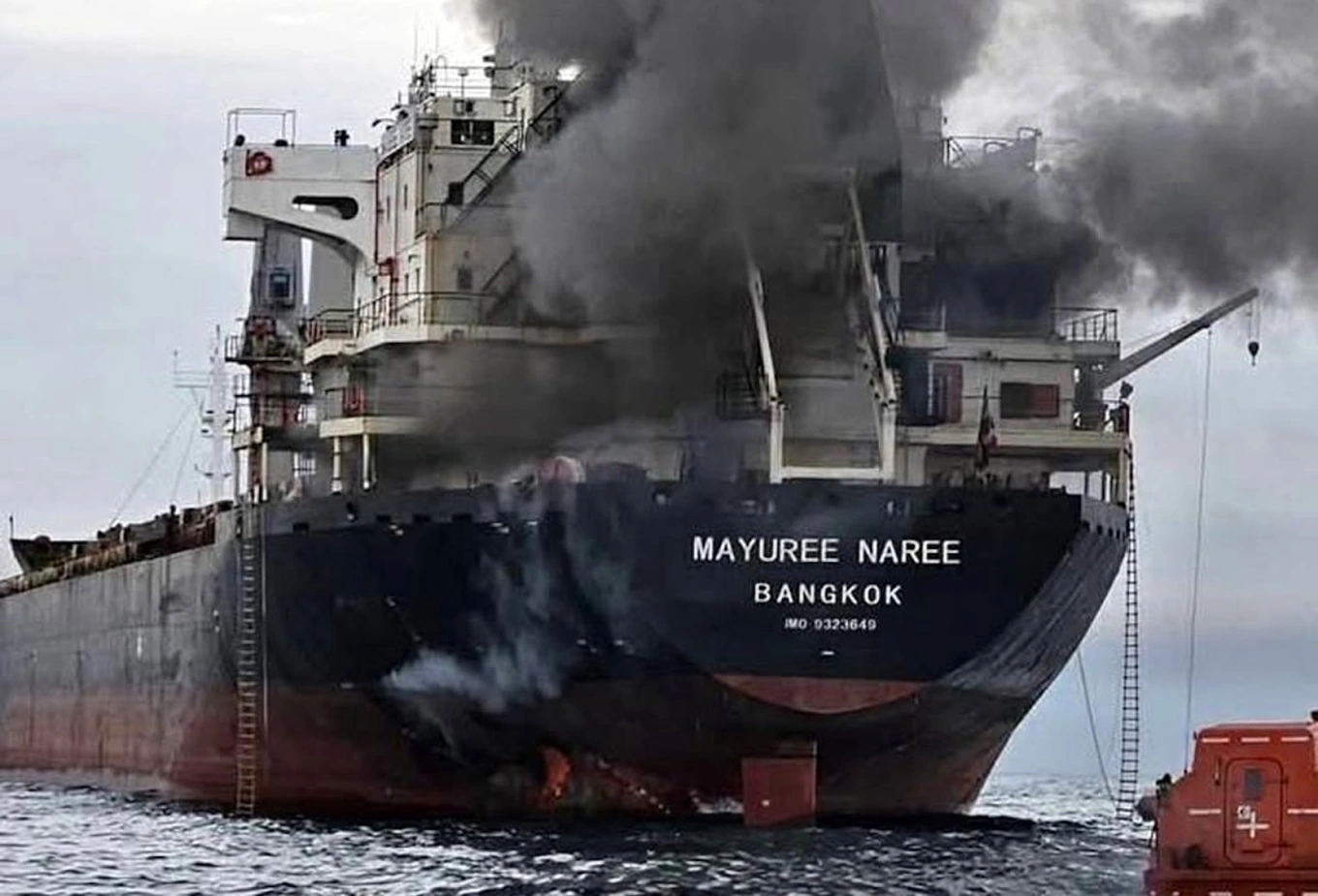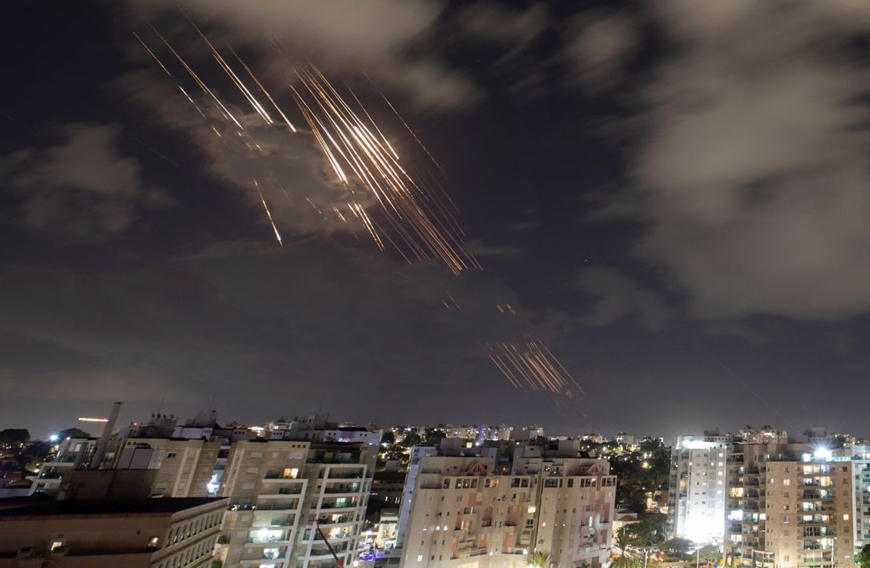
Iran has launched a new wave of strikes targeting U.S. and Israeli positions, while insisting it continues to produce missiles despite claims to the contrary.
Brigadier General Ali Mohammad Naeini, spokesperson for Iran’s Islamic Revolutionary Guard Corps (IRGC), said Tehran’s missile production remains intact, rejecting Israeli Prime Minister Benjamin Netanyahu’s assertion that Iran has lost its ability to manufacture ballistic missiles.
Referring to Iran’s grading system, where a score of 20 represents a perfect mark, Naeini said: “Our missile industry scores a 20. There is nothing to worry about. We are continuing production even under wartime conditions, which is remarkable, and there are no particular issues with our stockpiles.”
He also emphasized that the conflict would continue.
“The war will go on until the enemy is completely exhausted. It must end only when the shadow of war is removed from our country,” the Iranian general stated.
Earlier, in his first live press conference since the U.S.-Israel campaign against Iran began, Prime Minister Netanyahu claimed that “Iran currently has no capability to enrich uranium and no ability to produce ballistic missiles.”
On March 20, the IRGC announced it had carried out the 66th wave of attacks under its retaliatory campaign, “Operation True Promise 4,” launching a large-scale offensive using multiple missile systems against targets across Israel and U.S. military positions in the region.
According to the IRGC, the latest strikes were “successful,” hitting targets in central and southern Israel, including Tel Aviv.
U.S. bases across the region—including in Qatar, Bahrain, the United Arab Emirates, Kuwait, and Saudi Arabia—also faced intense Iranian retaliatory attacks.
The IRGC detailed the use of a combination of solid- and liquid-fueled missile systems, including the heavy Qadr missile with precision guidance and multiple warheads, as well as Khorramshahr and Kheibar Shekan missiles, and medium-range Qiam artillery rockets.
The 66th wave also involved the deployment of Zolfaghar missiles and attack drones, the IRGC said.
“This retaliation will continue,” the IRGC stressed.
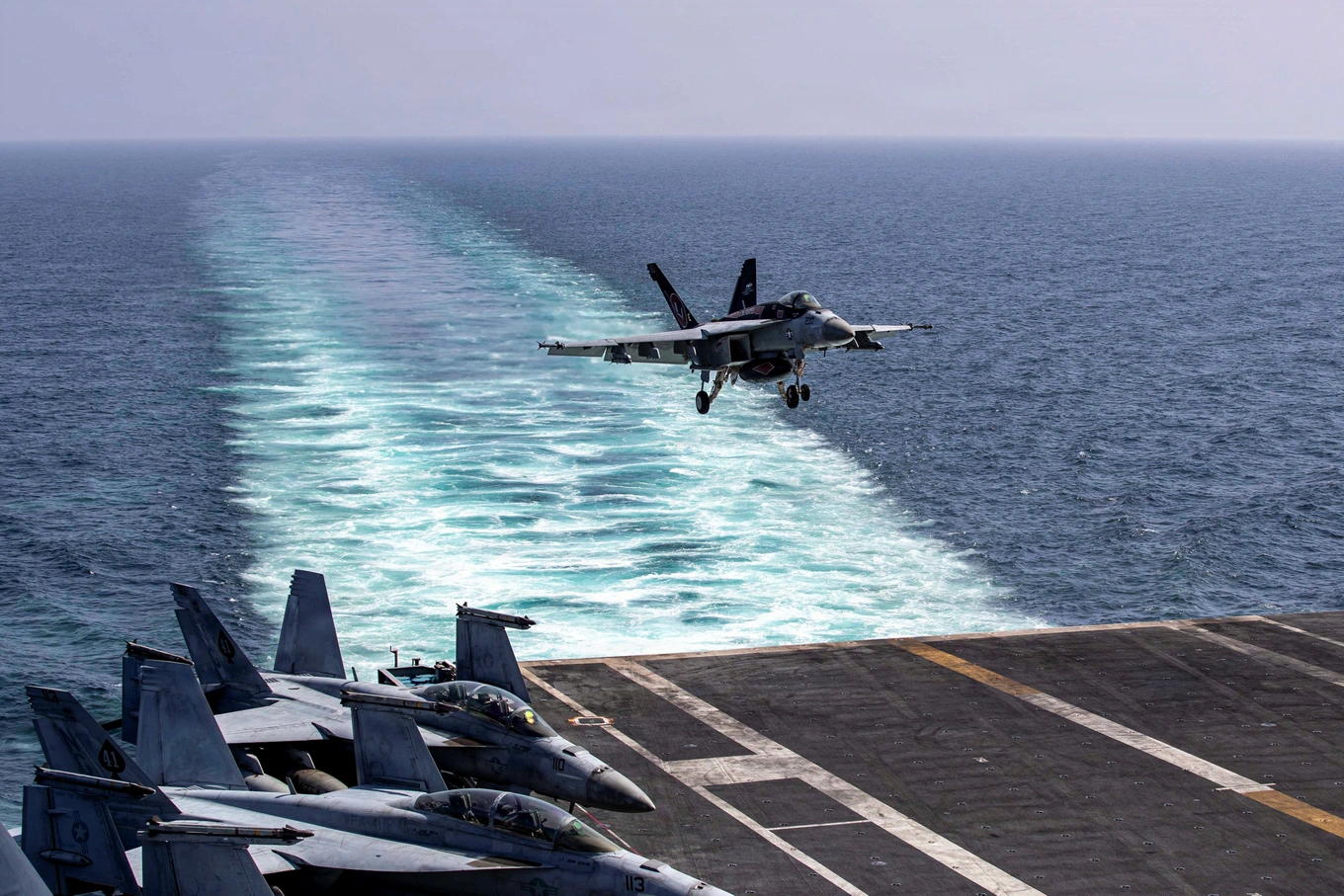
In a separate statement released earlier today, the IRGC pointed to the sudden withdrawal of the U.S. aircraft carrier USS Gerald R. Ford from the region as evidence of what it described as the “weakness” of a major power.
Earlier reports indicated that the USS Gerald R. Ford was expected to leave the Red Sea and return to port in Crete, Greece, for repairs following a fire onboard. According to an official, nearly 200 sailors were treated for smoke-related injuries.
The fire reportedly originated in a laundry area while the carrier was supporting operations related to the Iran campaign. The U.S. military has maintained that the vessel remains operational despite the incident.
However, the IRGC questioned the explanation for the carrier’s withdrawal amid ongoing hostilities: “What kind of massive warship is forced to leave the battlefield during a crisis because of a fire in a laundry room?” the statement said.
The IRGC also suggested that the carrier’s rerouting toward U.S. bases—and efforts to avoid passing through the Bab al-Mandab Strait, a route effectively controlled by armed groups in Yemen—raised serious questions.
The group added that this was not an isolated case, pointing to what it described as similar instability involving another U.S. vessel, the USS Abraham Lincoln, in the Indian Ocean in recent days.
Meanwhile, NBC News reported that the United States is accelerating the deployment of thousands of troops to the Middle East.
Sources said at least 2,200 U.S. Marines are expected to depart from San Diego, California, for the region in the coming days, earlier than originally planned.
Previously, Reuters also reported that Washington is considering sending additional thousands of troops to the Middle East, potentially to support operations related to Iran.